Home Info three locations & schools
IE7/Firefox/Chrome Tested

Latest news

Earn College Credit With Scuba Diving
You may be eligible to get college credit for learning how to scuba dive. PADI courses have been recommended by a variety of Institutions for college... Read more...
New Blog "All About Learning Spanish"
"All about learning Spanish" is the new Blog of Ingrid (Ins) Lommers, the founder and General Director of the Spanish at Locations organization. As... Read more...
New Building
New Building in Bocas del Toro Upcoming Program Dates Spanish by the Sea in Bocas del Toro has a new additional building. It offers a maximum of... Read more...
www.volunteerboquete.org
New site for volunteering in Boquete There is a new site specialized in volunteering in Boquete: www.volunteerboquete.org.  The site contains all... Read more...
NEW! Credits for your study
Accredited studies When studying 3 weeks, 20 hours per week  in group ($150 per week) or private lessons ($290 per week), you can do an exam at our... Read more...

Weather info

Weather for Turrialba
Partly Cloudy Scattered T-Storms Scattered T-Storms
29°C 27°C 27°C
Tue Wed Thu
Weather for David
Showers in the Vicinity Scattered T-Storms Scattered T-Storms
27°C 29°C 30°C
Tue Wed Thu
Weather for Bocas del Toro
Showers in the Vicinity Scattered T-Storms Scattered T-Storms
27°C 30°C 31°C
Tue Wed Thu

Login


Info three locations & schools

Turrialba

Costa Rica Democracy, Egalitarian values, No army, Nature conservation.
Costa Rica had its first democratic election in 1899 and although it wasn't until 1949 that also women and blacks were allowed to vote, we may say that Costa Rica has a better political reputation than the other Central America countries with less stable political climates and more dictators, military coups and internal strife listed in the history books. When the Spanish colonizers tried to dominate the Indigenous people while spreading war and disease, the surviving natives moved away to the mountain ranges, where they still live today. This way, the colonial families didn't have a work force to exploit and had to take care of themselves. Class divisions that exist to this day in other Latin American countries did not develop to the same degree here, resulting in the establishment of more egalitarian values than in other Latin American countries.

Turrialba-stad-medium

The Costa Ricans by nature seek to avoid conflicts and we may well say that the abolition of the army in 1948 fits in perfectly with the national character. More national resources could be channeled into health and education. Unfortunately Costa Rica, even without an army is fighting an uphill battle against her tremendous deficit. Costa Rica is a small country, but has a large variety of tropical habitants like, tropical rainforest, active volcanoes, jungles, beaches, hot springs, coral reefs and hidden caves and is protected by the best-developed conservation program in Latin America. 28% of Costa Rica's territory is legally set aside for wildlife and Indigenous life conservation. Top Turrialba Small -town feeling, Agriculture, Whitewater, Volcano, Archeological site. Turrialba, located at 650 meters above sea level, is a small town that also offers the services of a city. Surrounded by rushing rivers and mountains shrouded in mist, you can feel yourself really integrated in Costa Rican culture as Turrialba is not very touristy and is a great place to practice Spanish as not many people speak English. The population of the town and surrounding district is about 70.000 and all the Turrialbeños seem to know and greet each other.
Turrialba used to be the main stopping place on the old San José - Limón road and suffered an economic depression with the opening of Turrialba-park-smallthe new highway, which bypasses Turrialba completely. International whitewater fans who need local guides, houses, and transportation to the rivers have provided Turrialba with some new job opportunities, but obviously not enough to avoid high unemployment rates among the growing population of the town. Traditionally, Turrialbaños have been involved in growing coffee and sugarcane as well as some other traditional crops. Processing plants of both coffee and sugarcane are still functioning and can be visited by tourists.
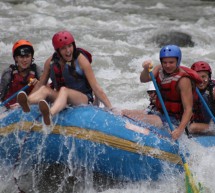
CATIE stands for Centro Agronómico Tropical de Investigación y Enseñanza and was established in 1940. It is one of the five major tropical research centers in the World. It has an extensive library that houses Latin America´s largest collection of literature on agriculture and natural resources. The facilities of CATIE include greenhouses, orchards, forest plantings, experimental agricultural grounds, a dairy, an herbarium, botanical garden and seed conservation chambers. Guayabo National Monument, on the slopes of Volcán Turrialba, is considered the most significant archaeological site in Costa Rica. There are many mysteries about the civilization that inhabited Guayabo. No one knows why the people left, just before the Spaniards arrived in Costa Rica. Turrialba is located on the banks of the River Turrialba, which flows into the Reventazón, 4 km to the east. The River Reventazón (burstling) is one of the more scenic and exciting rivers in Costa Rica. The river tumbles from the late at 1000m above sea level and down the eastern slopes of the mountains to the Caribbean lowlands. The Pejivalle river is another river that flows into the Reventazón, but it has a naturally flow (different from the River Reventazón that is dam controlled) and is of a stunning beauty. Pacuare river is the next major river valley east of the Reventazón. It is unarguably the most scenic rafting river in Costa Rica and one of the world's classic white-water experiences. The river plunges down the Caribbean slope through a series of spectacular canyons clothed in a virgin rainforest The 3339 meter high Volcán Turrialba is 15 km northwest of Turrialba and its last eruption was in 1866. The volcano is dormant today. There are three craters of which the middle one is the largest. This is the only one that still shows signs of activity. Below the craters we find cloud forest full of ferns, mosses, bromeliads, and with some luck you can spot the beautiful bird, the quetzal.
The school Oasis of peace, Outside, View volcano from the porch, Coffee, Adventures
Spanish by the River - Turrialba, founded June 2002, is located a little outside of the typically "Tico" town of Turrialba. In the center you can find a few hotels, some restaurants, (pool) bars, coffee shops, ice cream parlors, discos, a cinema, swimming pools, banks, internet cafés, a post office and gyms. When coming from San José, 10 minutes before entering town, you take a left into "Barrio El Recreo" to enter the "Entrada de Chirraca" and arrive at an oasis of peace and therefore a great place to study and relax. At 850 meters, it seems a little less hot and more "tranquilo" than in downtown Turrialba. Classes are mostly held outside, in one of the little huts or on the roomy porch, from where you have a beautiful view of the volcano and the lush, green surroundings. You can spot exotic birds like toucans, hummingbirds, and other tropical species while attending classes. During breaks we serve delicious coffee from the surrounding highlands and some tropical fruits. If you want to stretch your legs, you can walk down the street in front of the school and maybe see some leafcutter ants coming by or even a sloth! The school is starting its own organic farming project and you are welcome to have a look. The school in Turrialba is perfect for adventurous people that love to learn about different cultures, ecosystems and tropical farming. It is not for people that wish to go out each night in a cool, trendy discotheque. The people in Turrialba love to go out for some drinks and salsa dancing on the weekends but generally not during weekdays.
The other schools
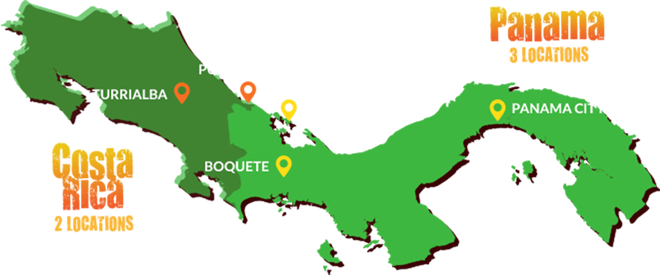
We have two other schools located in neighboring Panama. Each school has its own beauty and personality within a unique environment, taking advantage of its personality by offering particular excursions and volunteer work. We give you clear, printed instructions at the schools on how to travel. The trip between the Spanish by the River - Turrialba and Spanish by the Sea - Bocas goes partly along the Caribbean coast. The trip costs less than $15.00 and takes about seven hours in total. The trip between Spanish by the River - Turrialba and Spanish by the River - Boquete can be done by traveling on the Pacific side of Costa Rica. This trip takes about 10 hours and costs $15.00, but we recommend traveling first to Spanish by the Sea - Bocas and from there to Spanish by the River - Boquete.


Bocas del Toro

Panamá: The canal, islands, culture, richness, tourism.

The country, whose Indian name means "abundance of fish" is mostly known for its man-made canal, one of the engineering marvels of the world, but has much more to offer. In total there are 1518 islands off the long coasts and surfers, deep sea fishers, divers as well as sailors have discovered Panama as their heaven on earth. Contrary to Costa Rica, Panama's indigenous population (there are 7 tribes) constitutes a sizeable minority that proudly tries to preserve its traditions. Traditional Spanish Festivals are celebrated often in the interior of the country. The history of Panama is full of riches; Peruvian gold was carried by Spaniards from the Panama City to Portobelo on the Caribbean Coast, where it was shipped to Spain. Nowadays, Panama has the highest per-capita income of the Central American countries, but half of the population is living in poverty and by the end of the week has no money in its pockets. Tourism in Panama is booming and many foreigners have already discovered Panama as a wonderful country to travel or retire.

Bocas-students-at-beach-medium

Bocas del Toro: Laidback caribbean, Tourism, National Marine Park, Sea turtles

Food, architecture and language in Bocas originate from other parts of the Caribbean and are therefore different from the rest of the country. In Bocas everything still goes slow, but relaxed as it is, the town is experiencing a development boom and tourism is the most important business sector.

The archipelago is also called Bocas del Toro and is a biologist's fantasy. The national marine park is protecting mangroves, reefs and other important reserves for many species of Caribbean wildlife. Four of the world's eight sea turtle species nest on the beaches of the archipelago, but are threatened with extinction. Isla Colon (named after Christopher Columbus) is where the provinces capital with about 4500 inhabitants is situated.

bo - surf5

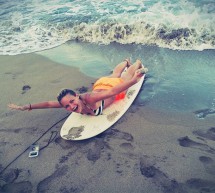
Surfing in Bocas del Toro

Bocas del Toro has only recently been discovered as a surf hotspot and although it is becoming one of the most popular destinations in Panama it is remarkably uncrowded compared to its neighbor Costa Rica. Bocas del Toro has two distinct surf seasons: winter wet season is from November- March, when the waves can be the biggest, and the short summer season from June – August. These two periods are best for those looking for more advanced surf. The remaining months of April, September and October generally have beautiful weather with small surf. The most ordinary waves are reef breaks, but there are also some beach breaks. There are few rights but the lefts are widely ranged. Bocas del Toro’s waves normally favor short boards. The nearest surf spot is located 10 minutes from the school and getting there requires a watertaxi.

For the beginning surfer Bocas del Toro offers decent spots for learning how to surf all year long. Depending on the size of the breaks, one of the best beaches for learning to surf is Wizard Beach, because it doesn´t have any reef or rocks. Beginners have to watch out though because the waves here can get very big and strong and follow up very quickly. Getting there by watertaxi costs $4 and the rent of a surfboard is $15 to $20 for one day. Usually you can rent one board with multiple persons as especially beginners get tired quickly. The closest place nearby for renting surfboards is Gran Kahuna hostel, which is just around the corner and you pass by it walking from the school to the watertaxi. If you want to combine your learning Spanish with learning how to surf, check our Spanish & Surf Special.

Bocas-reception-medium

The school: In town, outside classrooms in the garden, Caribbean house, adventures

Spanish by the Sea - Bocas del Toro, founded in 1998, is conveniently located on fourth street, right behind the now busy Main street. Classes are held everywhere around the building. In high season you can see teachers and students everywhere. They are on the balcony, the little huts, the café and students love the casual setting in which classes are conducted. In breaks we serve coffee and tea and sometimes tropical fruits. There is a café where you can buy sandwiches and shakes among others. Students are welcome to use the teaching stations to study in quiet hours and also the library with dictionaries and all kind of other helpful books. In the garden you find palm trees and banana plants. You can walk into town and find hotels, restaurants, tour operators, a bank, internet cafes, bars, shops and an airport.

The school in Bocas is perfect for adventurous people that love to learn the language without being rushed. Spanish and Sea adventures like diving, surfing and sailing makes your study time so much more pleasant. If you look for night life, every night, the popular Barco Hundido (Sunken ship) is open until very late.

The other schools

We have two other schools. One in the Chiriqui highlands in the town Boquete and the other is located in neighboring Costa Rica, in Turrialba. Each school has its own beauty and personality within a unique environment, taking advantage of its personality by offering particular excursions and volunteer work. We give you clear, printed instructions at the schools on how to travel. The trip between the Spanish by the Sea - Bocas and River - Turrialba goes partly along the Caribbean coast. The trip costs less than $15.00 and takes about seven hours in total. The trip between Spanish by the Sea - Bocas and Spanish by the River - Boquete can be done by traveling first to David and then back into the highlands. This trip takes about 6 hours and costs $15.00.


Boquete

Panama The canal, islands, culture, richness, tourism The country, whose Indian name means "abundance of fish" is mostly Panama-Bus-Smallknown for its man-made canal, one of the engineering marvels of the world, but has much more to offer. In total there are 1518 islands off the long coasts and surfers, deep sea fishers, divers as well as sailors have discovered Panama as their heaven on earth. Contrary to Costa Rica, Panama's indigenous population (there are 7 tribes) constitutes a sizeable minority that proudly tries to preserve its traditions. Traditional Spanish Festivals are celebrated often in the interior of the country. The history of Panama is full of riches; Peruvian gold was carried by Spaniards from the Panama City to Portobelo on the Caribbean Coast, where it was shipped to Spain. Nowadays, Panama has the highest per-capita income of the Central American countries, but half of the population is living in poverty and by the end of the week has no money in its pockets. Tourism in Panama is booming and many foreigners have already discovered Panama as a wonderful country to travel or retire.
Boquete Beauty in small package, coffee, Guaymís and celebrations Boquete is a small village of only 4000 inhabitants, Panama-girl-dance-smalllocated at 1060 meters above sea level, nestled in a beautiful green valley. The sparkling river Caldera is running through the village and volcano Barú raises majestically above surrounding mountains. Throughout Panama Boquete is known for its cool and fresh climate and pristine natural environment. During holidays this place is visited by many Panamanians from other parts of the country. Because of the very fertile volcanic soil, coffee, flowers, vegetables and citrus fruits are growing here abundantly. Especially coffee farms are an important source of income for indigenous people living in the mountains above Boquete. The Guaymís women wear colourful dresses and are commonly seen in the village. The people in this province are known for their friendliness and they are very willing to help you with your Spanish. It's a good place to practice your Spanish since only a few speak English. Volcano Barú is the only volcano in Panama and there is no record of its last eruption. The National Park Barú offers some great hikes to the top of the volcano or along the volcano to Cerro Punta. For birdwatchers this is the place to be. There isn't only one crater but seven. At the top of the volcano you will be able to see the Caribbean as well as the Pacific coast on a clear day. If you plan to climb the volcano you are advised to start early. During the afternoon the clouds are likely to spoil the view. In the second week of January a flower festival takes place. Boquete is known for its flower-lined streets and during this holiday season many Panamanians come to Boquete to admire the flowers and dance during the nights in one of the open air discothèques. In November there are some national holidays throughout the month which are celebrated extensively with parades and dancing during the night. The school Nestled in green settings, fruit garden, volcano view and lots of birds
Spanish by the River - Boquete, opened its doors in January 2006. It's located 5 kilometres outside Boquete at the entrance to the village Palmira. In Boquete you have a choice of accommodations, restaurants, (pool) bars, coffee shops, banks, internet cafes, a discothèque and some open air dance floors for special occasions. The school is at only 180 metres from the bus stop and the beautiful green fruit garden is a great place to be for relaxing and studying. From the garden you have a great view of volcano Barú and its lush green surroundings. The hummingbirds like to visit the banana flowers and orange blossoms and many other birds can be seen here. The school is excellent for students who appreciate tranquillity and want to combine learning the language with exploring the outdoors. If you like to go out dancing every day, this is not really a suitable place. The only discothèque in town is open every evening but mostly visited during the weekend.
The other schools
We have two other schools. Spanish by the Sea - Bocas is located in Panama and Spanish by the River - Turrialba in neighboring Costa Rica. Each school has its own beauty and personality within a unique environment, taking advantage of its personality by offering particular excursions and volunteer work. We give you clear, printed instructions at the schools on how to travel. The trip between the Spanish by the River - Boquete and Spanish by the Sea - Bocas goes mainly through the highlands where you can observe waterfalls and a lake that is part of a hydrological project. A boat trip is also part of the adventure to get to Spanish by the Sea. The trip between Spanish by the River - Boquete and Spanish by the River - Turrialba can be done by traveling on the Pacific side of Costa Rica. You can observe pineapple plantations and a beautiful river is also accompanying you for a large part. This trip takes about 10 hours and costs $15.00, but we recommend traveling first to Spanish by the Sea - Bocas and from there to Spanish by the River - Turrialba.


Impressions

Who's Online

We have 13 guests online